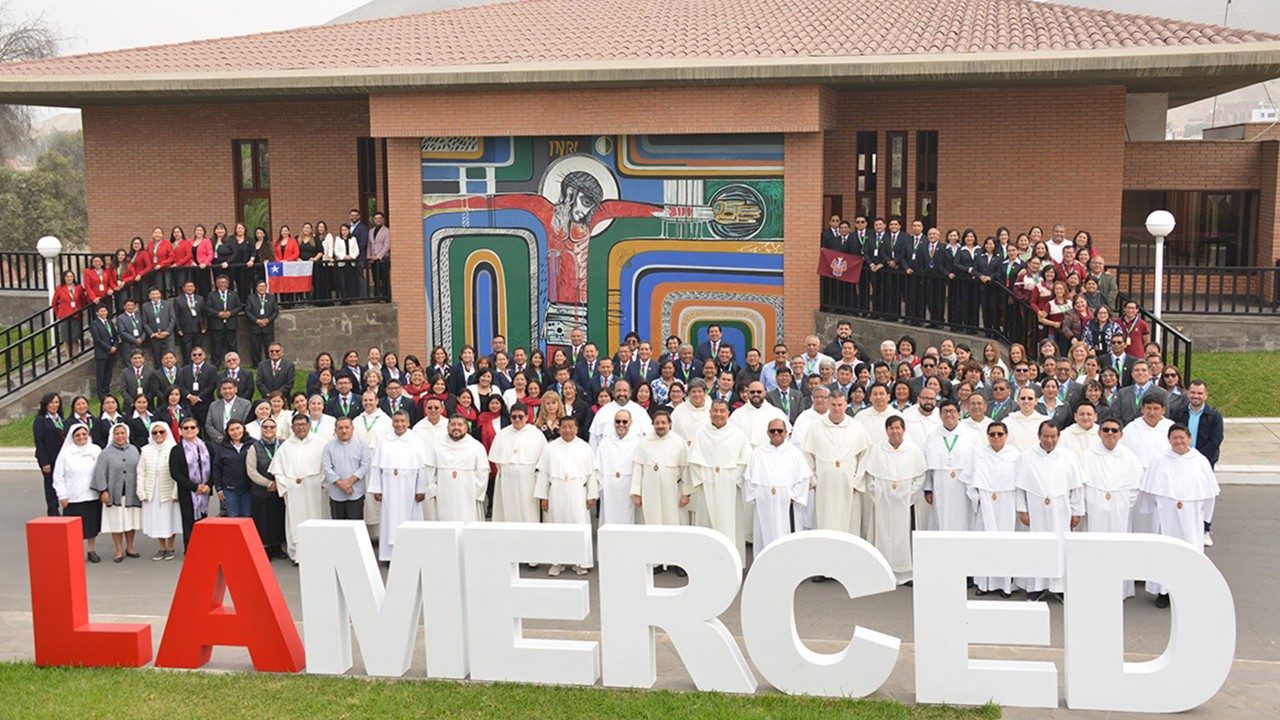
The city of Puebla, Mexico, will host the II Mercedarian Congress on Prison Ministry, to be held from October 14 to 16, 2026. The event is organized by the Order of Mercy, with the collaboration of the Mexican Mercedarian Province, and its central theme is «Beyond Punishment: A Mercedarian Look at Restorative Justice.» This was confirmed by Father Reginaldo Roberto Luis, General Councilor and General Secretary of Pastoral Care of the Order of Mercy, in an interview with Vatican News.
The congress aims to reflect, based on the Mercedarian experience, on restorative justice, fostering a culture of reparation and reconciliation for those deprived of liberty and their victims. According to Father Reginaldo, the main objective is «to reflect on the importance of restorative justice and on the role of the Church in building a culture of reparation and reconciliation.» In this sense, he clarified that restorative justice «does not mean ignoring the crime or its consequences,» but rather recognizing the need for the offender to take responsibility, to attend to victims, and to rebuild social ties.
Mercedarian spirituality is deeply linked to freedom and mercy. Father Reginaldo recalled that the Order of Our Lady of Mercy was founded with a special mission of redemption and liberation of captives, and that this charism remains alive, inspiring responses to the various forms of deprivation of liberty in contemporary society. «Our Lady of Mercy teaches us to look at those who suffer, especially those who are abandoned or forgotten,» he said. Prison ministry is, in his words, a concrete expression of that charism and of God’s mercy.
The congress program is spread over three days of activities. On October 14, it will begin with a reflection on the Christian vision of justice, forgiveness, mediation, and spiritual accompaniment in the prison setting. The opening conference will be dedicated to the relationship between Christian faith and justice. It will also address the needs of victims, the responsibility of the offender, and processes of personal change. Another topic will be the role of the Church in restoring social ties damaged by crime and in building possibilities for dialogue between the victim, the offender, and the community. In addition, roundtable discussions will be held to share experiences.
On October 15, there will be a deeper reflection on Our Lady of Mercy as a mediator of mercy on the peripheries of prisons. This theme invites us to think about the presence of the Church in places where so many people face isolation, exclusion, and loss of hope. There will also be discussion of the role of Mercedarian Homes and foundations in welcoming people leaving the prison system who lack a support network. The second day will also include a cultural visit to the city of Puebla.
October 16 will be dedicated to the formation of pastoral workers and prison personnel, with special attention to new forms of person-centered leadership. Father Reginaldo stressed that it is essential for those working in this field to develop an attitude of respect for human dignity, listening, and responsibility. The congress will close with a plenary session of conclusions to discuss agreements and commitments, and will formally end with Friday lunch.
Regarding the organization, Father Reginaldo indicated that the participation of five friars or pastoral workers per province is planned. The meeting will take place at Quinta San Ramón, in Puebla, Mexico, from October 14 to 16, 2026. The religious expressed his hope that this congress will strengthen the Mercedarian mission and help build increasingly humane responses to the challenges of the prison system. «We want to broaden dialogue, share good practices, and promote concrete actions of welcome, responsibility, and social reintegration,» he said. More than a meeting for reflection, they hope to renew their commitment to people deprived of liberty, their families, victims, and all of society.
Context and Relevance
The Catholic Church carries out important work of welcome and spiritual assistance to people deprived of liberty. Inspired by the Gospel, this mission seeks to bring hope to those in prison and contribute to a more humane society. The congress is part of this framework, seeking to deepen mercy, justice, forgiveness, and human dignity, according to Father Reginaldo.
The event’s perspective is not limited to prisoners but also includes victims. Father Reginaldo emphasized that restorative justice reminds us that crime has consequences for many people: there are victims, families, and communities that need to be heard and welcomed. «We need to build paths that favor taking responsibility, repairing harm, and, when possible and when those involved so desire, dialogue and reconciliation,» he explained. He also stressed that forgiveness cannot be imposed and that restorative justice must respect the dignity, safety, and will of victims. The Church can collaborate through listening, spiritual accompaniment, and promoting a culture of peace.
Another relevant aspect is attention to those leaving prison. Father Reginaldo noted that regaining freedom is only one stage in the process of rebuilding life, since many people leave without employment, without family support, and sometimes without a place to go. In this context, the work of Mercedarian Homes, foundations, and other social initiatives can represent an opportunity to start anew. Welcome must consider the person in their entirety: their material, emotional, social, and spiritual needs. Offering opportunities for transformation also helps prevent recidivism.
The congress also seeks to strengthen the formation of pastoral workers and prison personnel, promoting person-centered leadership and an attitude of respect, listening, and responsibility. With the planned participation of five friars or workers per province, the meeting is presented as a space to broaden dialogue, share good practices, and promote concrete actions of welcome, responsibility, and social reintegration.
Original source: www.vaticannews.va (published on October 12, 2026)