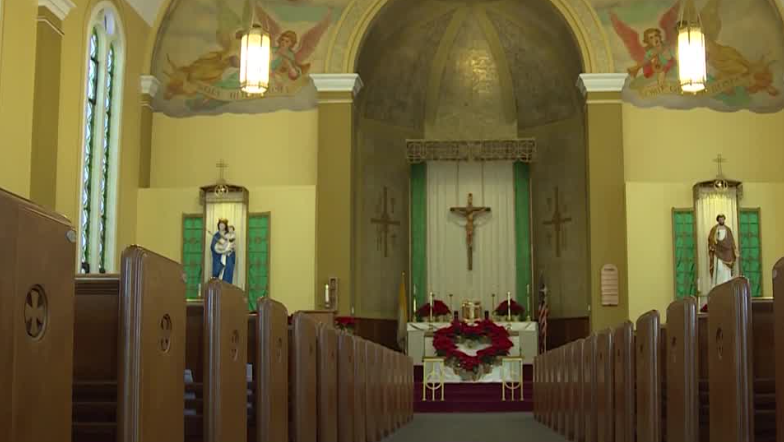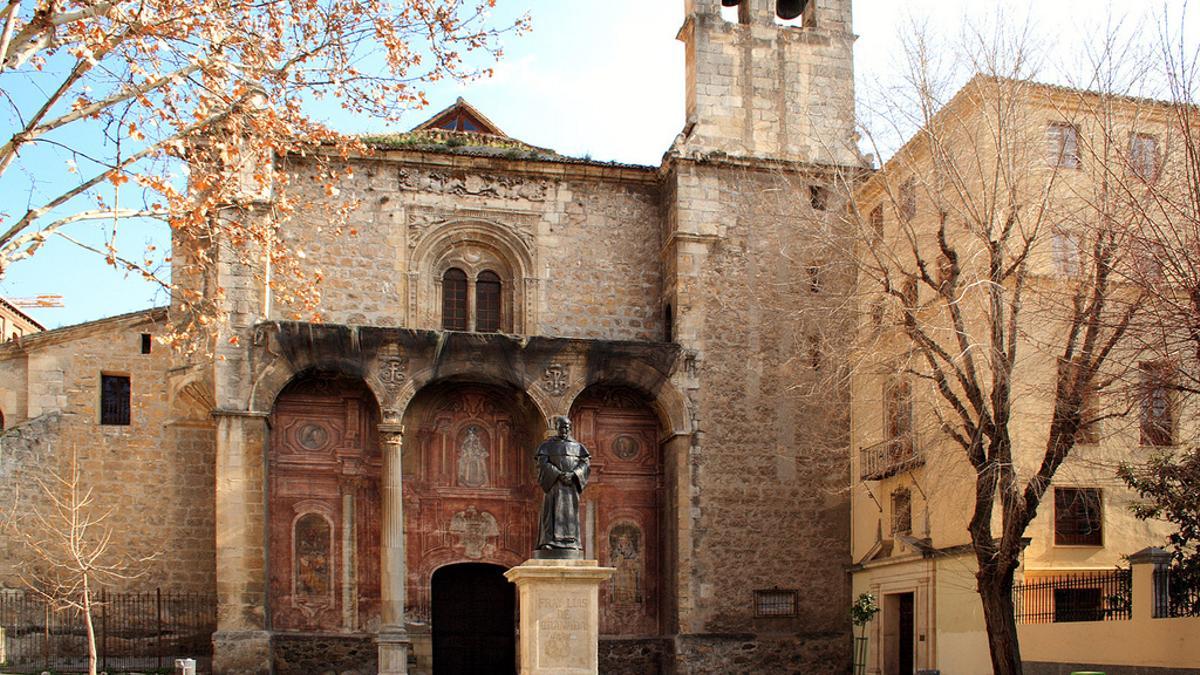
In the heart of Granada, the Church of Santo Domingo holds a story that combines faith, science, and popular tradition: the so-called ‘star miracle’. According to accounts recently spread by communicator Desirée Lara, in July 1678, a local woman, while praying before the image of the Virgin of the Rosary, observed a bright star on the forehead of the carving. Astonishment quickly spread, and the next day the temple was filled with faithful who wanted to see the phenomenon with their own eyes.
The news transcended the local sphere and reached the ears of ecclesiastical authorities, who decided to investigate the event. A committee of twenty experts in sculpture and painting was formed, with full authorization to carry out the tests they deemed appropriate. For several days, the specialists examined the image, opening and closing the temple doors to analyze the incidence of natural light on the carving. After the inquiries, fourteen of them were convinced that it was a supernatural phenomenon, four could not pronounce themselves, and two maintained that it had a natural explanation.
The majority opinion prompted the sending of a file to Rome, hoping to obtain official recognition from the Vatican. However, the response took a century to arrive and was forceful: the Vatican denied the miraculous nature of the event, aligning with the minority that attributed it to a reflection of the sun on the varnishes of the image. Despite this, popular devotion did not decline, and the faithful placed a star on the forehead of the Virgin, which can still be seen today as a reminder of that episode.
This case illustrates the distinction between devotion, testimony, and official recognition by the Church. While popular devotion and the testimony of the faithful are legitimate expressions of piety, official recognition of a miracle requires a rigorous canonical process, which in this case concluded with an attribution to natural causes. The Church, through the Vatican, exercised its authority to clarify the fact, preventing an optical confusion from becoming dogma.
Context and relevance
The Church of Santo Domingo is one of the most visited temples in Granada, not only for its architectural value but also for the stories it houses. The ‘star miracle’ has remained in the collective imagination for more than three centuries, and the star placed on the image of the Virgin of the Rosary is a tangible testimony to that memory. Although the Vatican denied it, the episode remains an example of how faith and reason can dialogue, and how the Church distinguishes between natural and supernatural phenomena.
The dissemination of this story through social networks has revived interest in Granada’s religious heritage and in the processes of ecclesial discernment. For Catholics, remembering that the Church acts with prudence and rigor in the face of alleged miracles is an invitation to deepen faith with foundation, without falling into unfounded credulity. The star of the Virgin of the Rosary remains a symbol of that episode, but also a reminder that truth, even when it dismantles a legend, can enrich spirituality.
Original source: www.elcorreoweb.es (published on July 12, 2026)