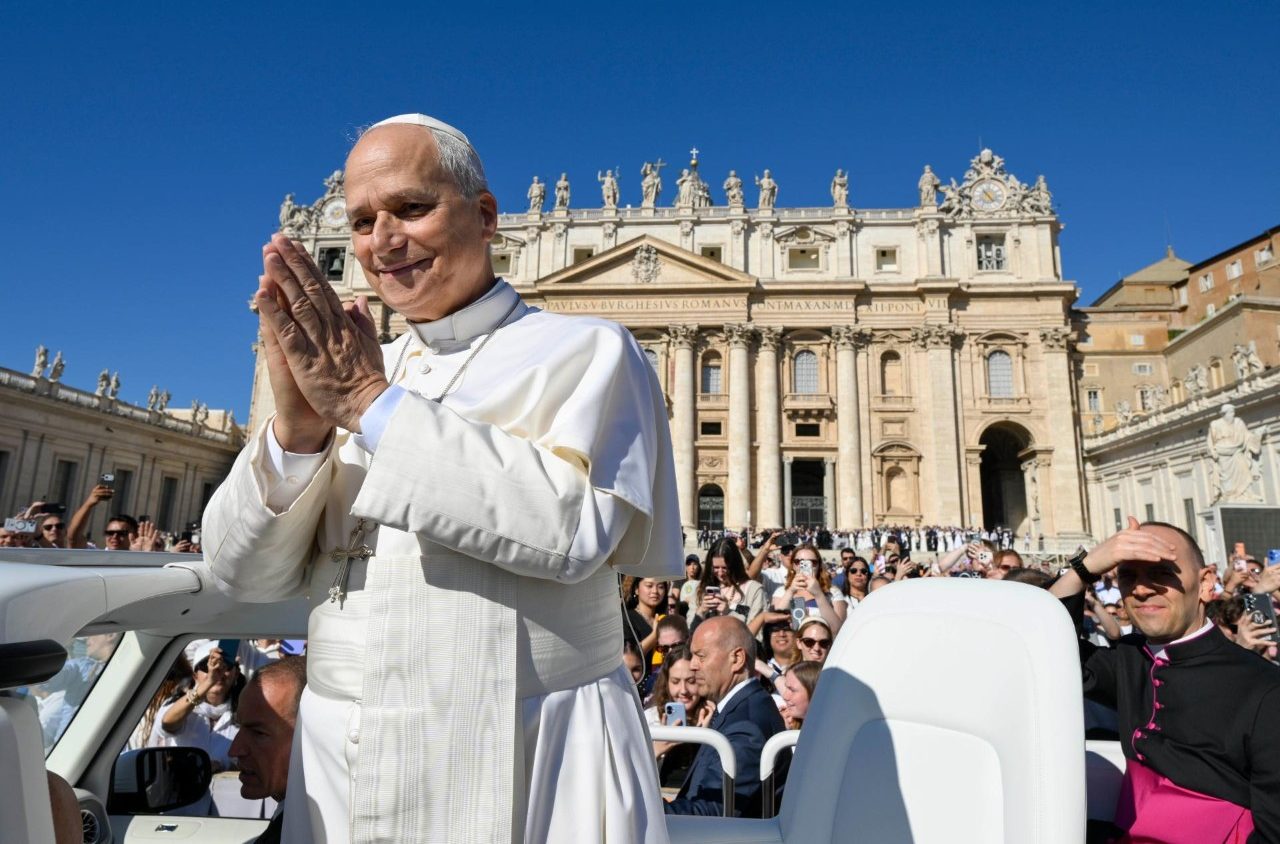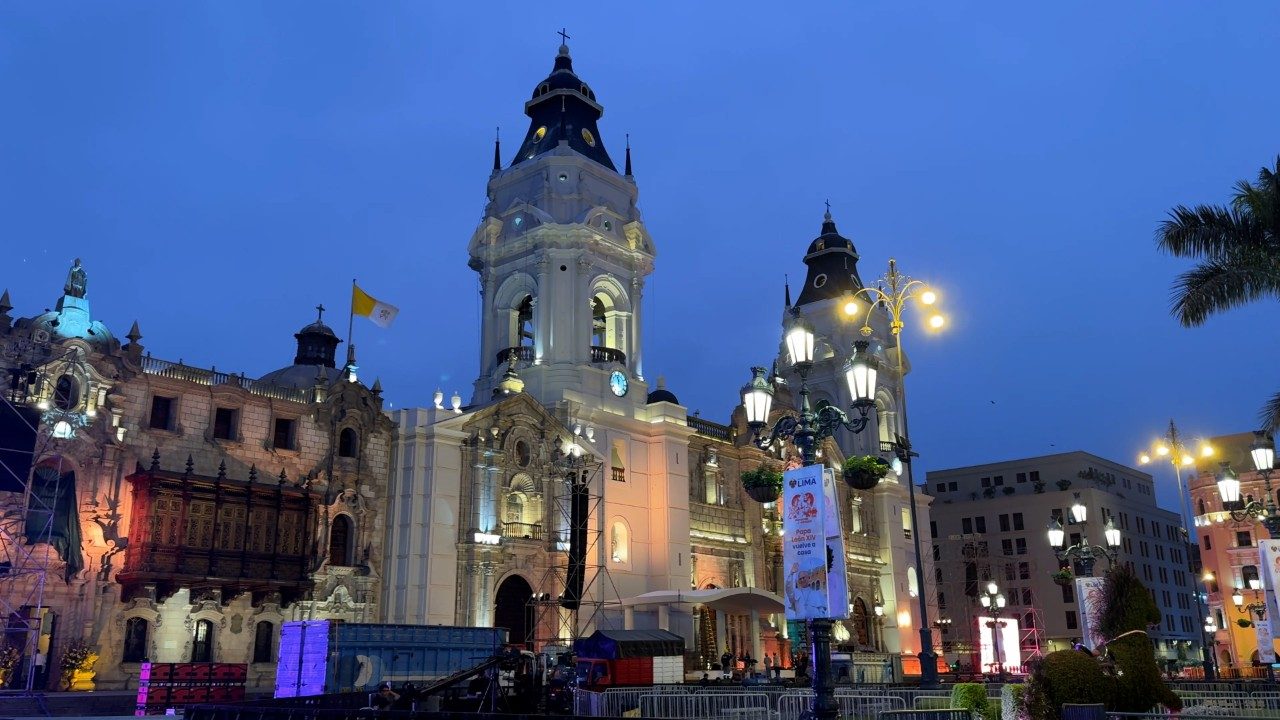
During his apostolic journey to South America, Pope Leo XIV recalled the Peruvian saints and blesseds who have helped shape the country’s cultural, human, and spiritual identity. In his first words in Lima, during the meeting with authorities, civil society, and the diplomatic corps at the Gran Teatro Nacional, the Pontiff evoked the figure of Saint Rose of Lima, the first saint canonized in the New World and patroness of Peru, all of Latin America, the Indies, and the Philippines. Likewise, in his meeting with the bishops of Peru, he cited the example of Saint Turibius of Mogrovejo and Saint John Macias, among others.
Confirmed facts
Saint Rose of Lima, the tenth of thirteen children of the Flores de Oliva family, Spanish nobles settled in the country, was born in 1586. In her mother’s house she created a kind of refuge for the needy, where she cared for abandoned children and the elderly, especially those of indigenous origin. From an early age she wished to consecrate herself to God, but remained a virgin in the world. As a Dominican tertiary, she secluded herself in a small cell built in the garden of her house, where she spent much of her days in prayer, particularly for the conversion of the Spanish and the evangelization of the indigenous peoples. Various mortifications and bodily penances are attributed to her, as well as numerous conversions and miracles. She died on August 23, 1617, and was canonized in 1671.
Saint Turibius of Mogrovejo, one of the best-known and most venerated saints of Peru and Latin America, was bishop of Lima for 25 years, between the late 16th and early 17th centuries. An expert in law and driven by fervent apostolic zeal, he visited his vast diocese on numerous occasions, often on foot, diligently caring for the faithful entrusted to him. He eradicated abuses and scandals among the clergy through synods, catechized and converted the indigenous peoples, founded a hundred parishes, convened a pan-American council, two provincial councils, and twelve diocesan synods. When the plague reached Peru, he took charge of caring for the sick, giving them everything he had. He died during one of his journeys, in Saña, in 1606. Benedict XIII canonized him in 1726; Saint John Paul II proclaimed him patron of the Latin American episcopate in 1983.
Saint Francis Solanus, patron saint of the city and of numerous other American towns, from Santiago de Chile to Havana, Cuba, was born in Montilla, Spain, in 1549. He entered the Order of Friars Minor Franciscans at the age of twenty. In 1589 he set out for South America, driven by the desire to evangelize the indigenous populations. After a long and arduous journey, he arrived in Tucumán, in present-day Argentina, where he carried out intense missionary work for eight years. He learned several indigenous languages, such as Quechua, Guaraní, and Tonokoté, in order to communicate directly with the local population. Tradition attributes numerous miracles and healings to him, earning him the title «thaumaturge of the New World.» In 1598 he was transferred to Peru, where he continued his evangelizing work in Trujillo and Lima, dedicating himself mainly to preaching and caring for the poor and sick. He died in the capital on July 14, 1610, and was canonized by Pope Benedict XIII on December 27, 1726.
Saint Martin de Porres was canonized by Saint John XXIII on May 6, 1962. Born in Lima on December 9, 1579, this religious experienced the difficulties of his condition as an illegitimate and mestizo son. He entered the Dominican Order as a tertiary and learned medicine, a profession he later practiced with great dedication among the poor of the Peruvian capital, becoming a Cooperating Brother of the Order. Devoted to fasting, penance, and prayer, he led a life marked by simplicity and humility, imbued with love. He died in Lima on November 3, 1639. He is considered the patron saint of barbers and hairdressers.
Saint John Macias was born on March 2, 1585, in Ribera de Fresno, Spain. Under the spiritual guidance of Saint John the Evangelist, around the age of thirty he set out for Lima, where he settled and worked as a shepherd. In 1622 he entered the Dominican convent of Santa María Magdalena as a cooperating brother and professed his vows the following year. He was then entrusted with the task of porter, from which he was able to dedicate himself entirely to caring for the poor. His biography also recalls his friendship with Saint Martin de Porres, with whom he shared a commitment to serving the most needy. He died in the Peruvian capital on September 16, 1645, and was canonized by Saint Paul VI on September 28, 1975.
Context and relevance
The mention of these saints and blesseds by Pope Leo XIV underscores their role as witnesses of a missionary zeal that materialized in fervent evangelization and closeness to the needy. Many of them appear represented in the logo accompanying the Pope’s visit, whose motto invites opening «the heart» to evangelization and making charity toward the needy a priority. The figure of Saint Rose of Lima, as the first saint canonized in the New World, and that of Saint Turibius of Mogrovejo, on the front line against the plague, are examples of dedication that the Pontiff wished to highlight during his journey through Peru.
Original source: www.vaticannews.va (published on November 13, 2026)