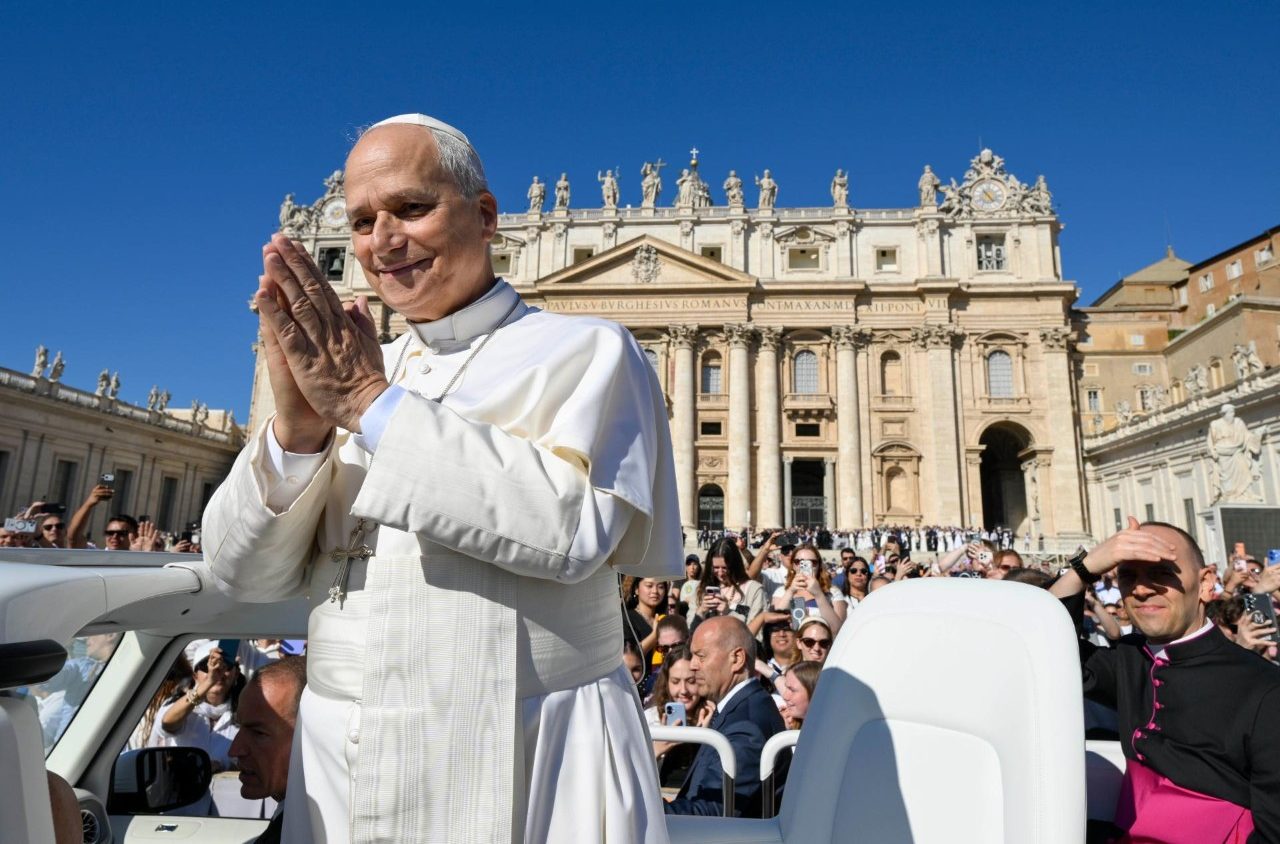
In the general audience of September 16, held in St. Peter’s Square, Pope Leo XIV continued his catechesis cycle on the pastoral constitution Gaudium et spes, focusing on the second chapter, dedicated to the «human community.» In his reflection, the Pontiff addressed the challenges that technological development poses to social relationships and warned about the risk of delegating to algorithms decisions that belong solely to the human conscience.
Technological Development and Social Relationships
The Pope noted that, on the one hand, technological development, the spread of media and social networks, as well as the increasing use of artificial intelligence, open new possibilities, breaking down barriers and distances. However, he warned that, on the other hand, relationships tend to be increasingly less personal and more virtual, and there is a risk of becoming accustomed to delegating to algorithms decisions that belong solely to the human conscience. In this regard, he stated that ensuring social relationships have real content and personal depth is the contribution that the Christian community intends to offer.
The Common Good and the Dignity of the Person
Leo XIV revisited the definition of the common good offered by Gaudium et spes: «The sum of those conditions of social life which allow social groups and their individual members relatively thorough and ready access to their own fulfillment.» Based on this definition, he identified some practical consequences, beginning with respect for the human person. He condemned «every form of homicide, genocide, abortion, euthanasia, and even willful suicide,» as well as everything that violates the integrity of the person, such as mutilation, torture inflicted on body and mind, and psychological coercion. He also described as shameful subhuman living conditions, arbitrary detention, deportation, slavery, prostitution, the trafficking of women and young people, and degrading working conditions in which workers are treated as mere instruments of profit and not as free and responsible persons.
Overcoming the Individualistic Mindset
The Pontiff stressed that the common good implies respecting those who think and act differently from oneself, since every human being demands the same social justice. He called for overcoming an «individualistic mindset» and adopting an attitude of responsibility and participation. He also recalled that the diversity of persons and peoples should not be considered a danger or a threat, but a possibility for enrichment and growth. Confrontation, which sometimes degenerates into violence, is the fruit of the power of sin and of how it conditions mindsets and actions, causing destruction and death. Therefore, he urged opening up ever more to the logic of reciprocity, participation, and care.
Context and Relevance
This is the fourth reflection in the cycle dedicated to Gaudium et spes, a document of the Second Vatican Council. Pope Leo XIV highlighted that the vision of humanity as a «community of persons» is a valuable legacy of that Council, and that it helps to carry out a personal and communal discernment to responsibly evaluate today’s social and political projects, in accordance with the criteria of the dignity of the human person, social justice, and free participation in building the common good. He concluded by stating that «the future of humanity depends on the commitment of each person to collaborate with God and with brothers and sisters in building a more human world.»
Original source: www.vaticannews.va (published on September 16, 2026)