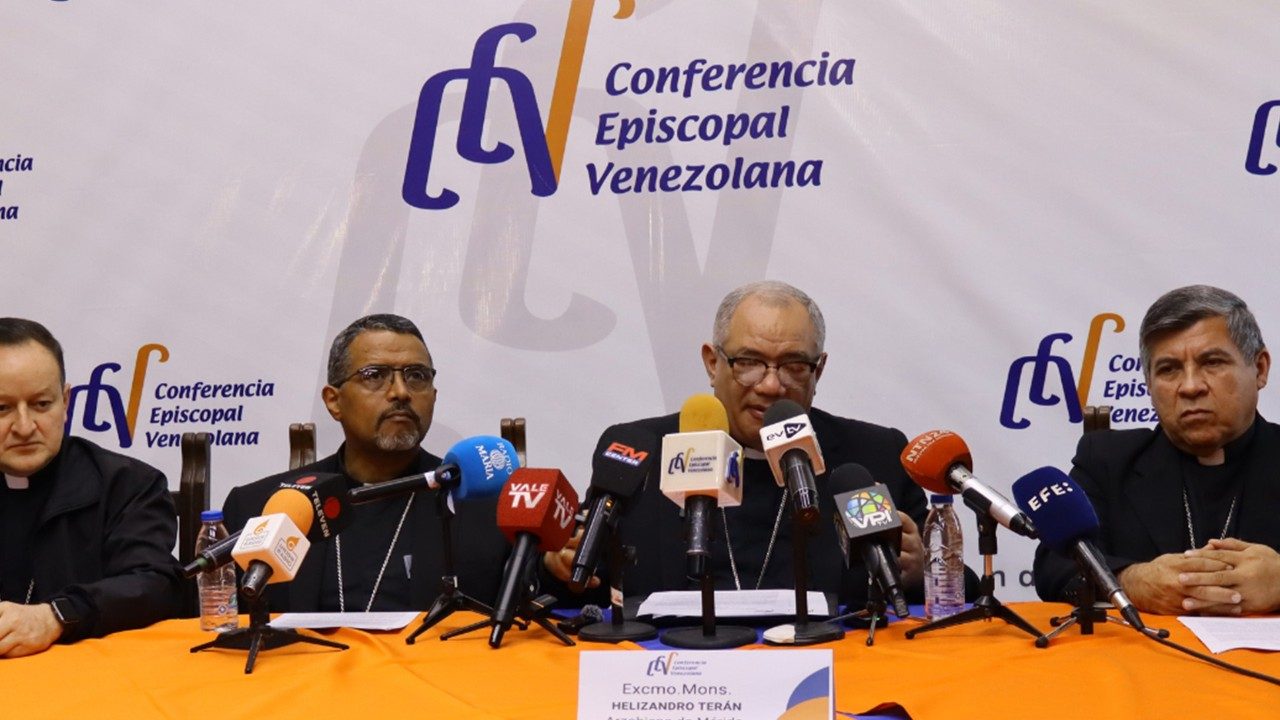
At the close of their 126th Plenary Assembly, Venezuela’s bishops published a pastoral exhortation urging a comprehensive rebuilding of the nation and denouncing widespread impoverishment, the education and health crises, and political polarization. The document, whose motto is «Lord, in your light we see light,» was debated in an atmosphere of prayer, dialogue and synodal listening, the prelates said, and addresses both church matters and the urgent challenges facing the country.
The bishops state that the Church does not stand apart from the suffering of its people and that, inspired by Jesus Christ the Good Shepherd, they bear witness to the complex social reality and the pressing need for comprehensive rebuilding. The text is addressed to the People of God who travel in Venezuela, to those who exercise leadership, to public institutions — which must truly serve everyone — and to people of good will, reaffirming their commitment to building a more just, fraternal and peaceful country.
Among the confirmed points, the document expresses concern over widespread impoverishment, human rights violations and the suffering of Venezuelans inside and outside the country due to violence, the slow judicial processing of political prisoners, both civilian and military, and institutional neglect. On education, they warn that the system is going through a structural crisis marked by poverty-level teachers’ salaries, precarious school infrastructure without basic services and high dropout rates. Weakening education, they stress, is mortgaging the future of new generations and cutting short the nation’s ethical and democratic refounding, so they value the heroic efforts of educators.
On health, the prelates note that the persistent shortage of supplies in public hospitals, the insufficient pay of medical and health personnel and the deterioration of the care network prevent equitable access to this fundamental right. They insist that church charity does not replace the State’s fundamental obligation to guarantee efficient and just public health policies. They also address employment and the economy: they note the loss of purchasing power, salary compensation through bonuses, the collapse of pensions, the use of multiple currencies and labor informality, which has generated deep inequality. Add to this the very serious problem of the electricity system and concern that revenue from oil production has not benefited the common good.
On the political front, the Assembly denounces a climate marked by polarization, a lack of institutional order and the restriction of democratic guarantees, and calls for the full restoration of the Constitution, as well as free and transparent elections with an impartial National Electoral Council and an independent Supreme Court of Justice, so as to guarantee due process, an end to disqualifications and respect for the political rights of all citizens. It also warns of the deterioration of the social and family fabric, with children left unprotected, youth despair and neglect of older adults, a situation worsened by recent earthquakes.
Despite this panorama, the bishops identify signs of hope: the release of political prisoners, both civilian and military, which must continue so that no one is detained for thinking differently; greater freedom of expression for the media; the reduction of the many checkpoints — at many of which extortion was practiced — and a gradual reactivation of the oil industry that is creating new job opportunities. Nevertheless, they warn that many actions are still needed to restore citizens’ rights. The document officially thanks the coordinated help of neighbors, Caritas and other bodies within the Catholic Church and sister churches, NGOs, rescuers and national and international institutions after the earthquakes, and notes that the damage requires a thorough assessment of building quality, soil studies and public oversight.
Context and relevance
The Exhortation sets out several lines of action. The first is to integrate the defense of human life and its fundamental rights into all public policy, social initiative and economic negotiation. It also proposes strengthening the Human Rights Vicariates and care networks in dioceses and in civil society to provide legal, moral and psychological support to victims of human rights violations, to political prisoners and their families. The bishops urge political, economic, academic and civil society leaders to overcome the dynamics of polarization and commit to a national agreement grounded in truth, forgiveness, justice and reconciliation. They also request the repeal of laws that restrict the work of NGOs so that they can fully join in caring for those affected by the earthquakes.
The Assembly calls for creating and consolidating spaces for encounter, listening and dialogue in parishes and communities to contribute to national reconciliation, and encourages lay faithful to fully assume their vocation in public and political life, as a renewed citizen leadership, the ethical recovery of institutions and the honest management of the common good. On education, it calls for a national education pact that guarantees dignified operating conditions, prevents student dropout and dignifies the work of teachers. To respond to emergencies, they propose strengthening the charity and social action network through national, diocesan and parish Caritas, with soup kitchens, community cooking pots, comprehensive medical care days and assistance programs for older adults and malnourished children, coordinating domestic solidarity and support from international cooperation.
Finally, since the central stage of the Coromoto jubilee year began last September 8, the bishops invite the various ecclesiastical jurisdictions to schedule days of prayer for Venezuela so that faith may be renewed throughout the country. The Exhortation concludes with a call to join a great national rebuilding plan: an inclusive, democratic and ethical path toward lasting peace. With this document, the bishops’ conference reaffirms its pastoral commitment and its call to personal and community conversion at one of the most complex stages in Venezuelan history.
Original source: www.vaticannews.va (published October 24, 2026)