Ten sisters of the Company of the Daughters of Charity of St. Vincent de Paul carry out their ministry in Bratislava, the capital of Slovakia, where every day they enter the lives of people struggling with poverty, illness, loneliness or a loss of meaning in life. Their work spans areas such as caring for children and young people, people who are homeless, those facing addiction, hospital patients and the terminally ill in their own homes. The religious sisters stress that their vocation is not simply a form of service but a concrete way of living the Gospel, inspired by St. Vincent de Paul’s conviction that «no form of suffering should be alien to them.»
According to the sisters, today’s society often manages to hide suffering. Although health care and social assistance systems may appear to work well at first glance, they often fail precisely in situations that require immediate help. People in difficulty find themselves trapped in a bureaucratic maze that exhausts them instead of leading them toward a solution. The sisters also observe growing uncertainty regarding values and the education of young people. In their experience, many of today’s problems stem from broken family relationships and the uncritical influence of the media and social networks.
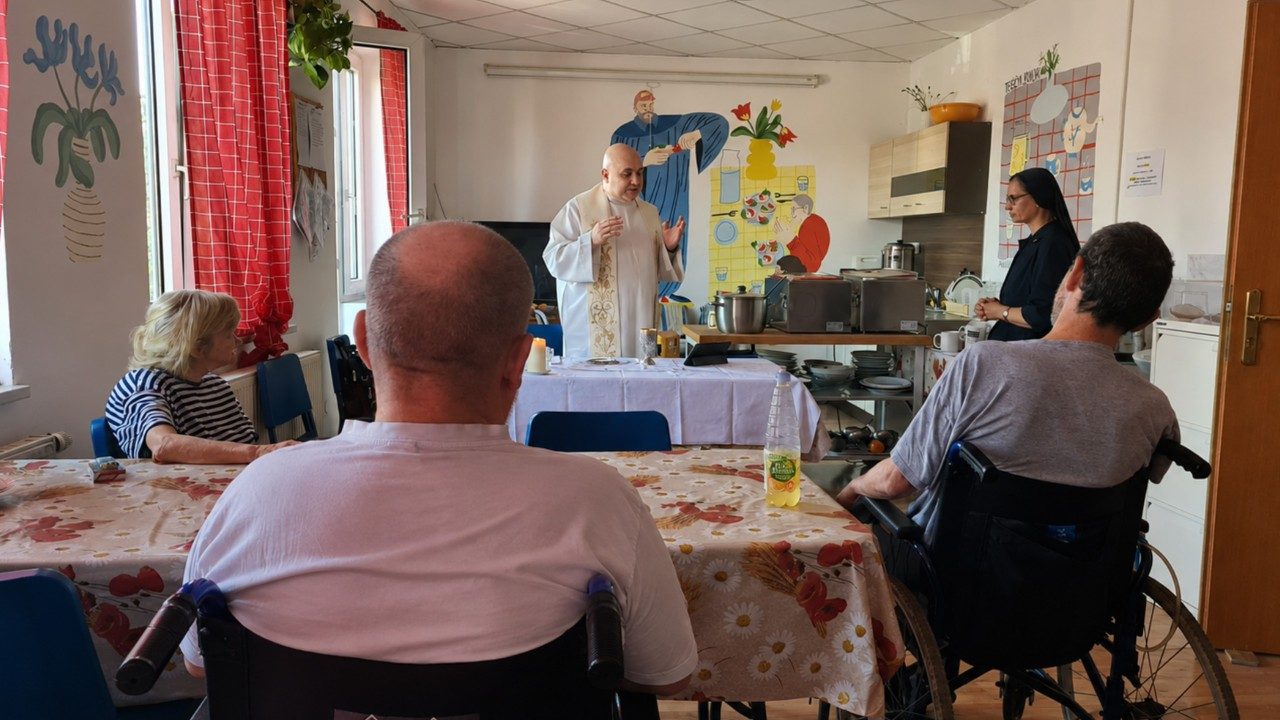
A central place in their ministry is the nonprofit organization Depaul Slovakia, which over the past twenty years has helped people who are homeless rebuild their lives. St. Louise’s Shelter also welcomes people with serious health problems or terminal illnesses. One resident was Mr. František, who arrived after suffering a leg injury. Little by little he became involved in the life of the shelter, and the community prayer of the Chaplet of Divine Mercy moved him deeply. His faith was rekindled, he prepared to receive the sacraments, he was reconciled with his family and eventually found work and housing. Another resident is a young man named Peter, who is battling a serious kidney disease while awaiting a transplant. Despite his own suffering, he willingly helps new residents arriving at the shelter. «We believe that the Lord works in the hearts of the poor and wins great victories,» the sisters said.
The sisters also share testimonies from the St. Catherine Labouré mobile hospice, through which they accompany people in the final stage of life in the comfort of their own homes. They recall the story of a 47-year-old woman who initially resisted the presence of a sister. A week later, the sisters found her unconscious and in critical condition. Yet shortly before she died, she opened her eyes and looked serenely at the sister’s face as she spoke to her of the love of her family and of God, who was waiting for her like a Father welcoming his daughter. Then the woman gently took her husband’s hands and died in peace. Another story is that of an elderly woman cared for by her two daughters. «Although they cared for their mother in an exemplary way, the relationship between the sisters had been tense for many years,» one of the nuns recalled. The woman died after receiving the sacrament of the Anointing of the Sick, while the sisters continued to visit her regularly. «After the funeral, one of the daughters wrote to me to share what she considered most important. And something else. In the end, despite all of this, Mom brought my sister and me back together. Our relationship has improved. I believe it will stay that way,» said Sister Adriána.
Context and relevance
The sisters’ experiences reveal that, today, evangelization is often not carried out through grand words but through a quiet, faithful closeness to people in need. «Today, evangelization takes the form of presence—a humble, attentive and persevering presence. The value of consecrated life, a life lived with God, in God and for others, remains irreplaceable,» the sisters concluded. At a time when many people feel alone and lost, this kind of presence remains one of the most powerful testimonies of Christian hope. The work of these religious sisters in Bratislava shows a concrete pastoral consequence: accompanying those facing poverty, illness or loneliness, offering a constant presence that transforms lives and relationships without the need for grand speeches.
Original source: www.vaticannews.va (published October 30, 2026)