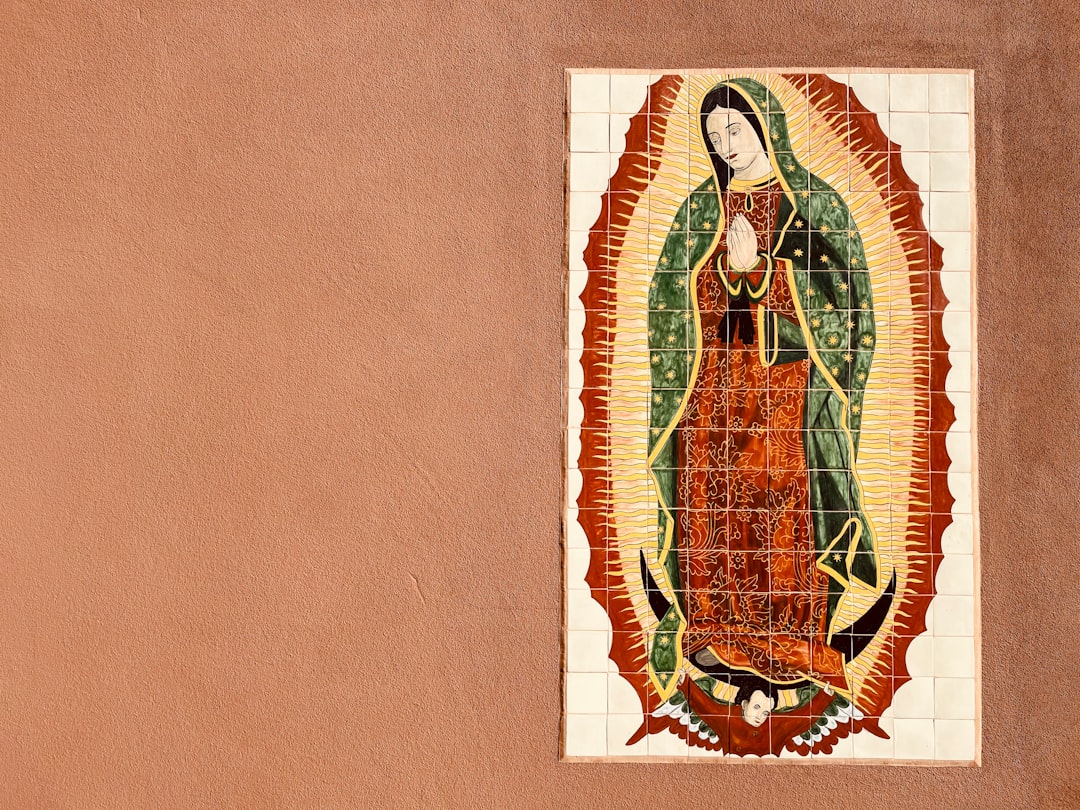
What began as a routine day of excavations in the municipality of Aquismón, San Luis Potosí, turned into a topic of great interest on social media and among residents of the Huasteca region. A group of workers carrying out construction and earthmoving in the area known as Las Golondrinas claimed to have found an image of the Virgin of Guadalupe imprinted on a huge rock.
According to the workers’ own testimonies, one of them noticed a peculiar silhouette as excavation work progressed. Upon approaching, several identified a figure they immediately associated with the Virgin of Guadalupe, causing surprise and excitement among the team. The discovery occurred in the context of a road project in the region, and photos and videos quickly spread on digital platforms.
Viralization on social media
Images of the alleged phenomenon soon circulated online, attracting the attention of users across the country. The photos show a vertical mark on the rock, whose shape was interpreted by some as a representation similar to the Guadalupan figure. Comments like “It really does look like the Virgin” multiplied on social media, while others claimed the discovery was a special sign for the community. The spread of the case prompted several people to go to the construction site to personally observe the rock and take their own photos.
Temporary halt of work
According to versions shared by the workers present, the impact of the discovery was such that work was temporarily halted while several people carefully observed the formation on the stone. Some workers began recording videos and sharing images from the site, further accelerating the viralization of the case on social media and local messaging groups. In communities of the Huasteca potosina, where religious traditions have deep cultural roots, such events often generate great interest among the population.
Between faith and natural explanations
While some people consider the discovery a possible religious manifestation, other users point out that it could simply be a natural formation caused by the texture, moisture, or erosion of the rock. Experts explain that the human brain tends to identify familiar figures in stains, shadows, or natural surfaces, a phenomenon known as pareidolia. Even so, interpretations of such images often divide opinions and spark debates between those who find religious meanings and those who seek scientific explanations. “Everyone sees what they want to see,” some users wrote on social media, where posts related to the rock continue to accumulate reactions and comments.
The Virgin of Guadalupe and its cultural impact
The image of the Virgin of Guadalupe is one of the most important religious and cultural symbols in Mexico. Its presence is deeply rooted in popular traditions, celebrations, and expressions of faith in different regions of the country. On many occasions, alleged apparitions or figures associated with the Virgin have generated impromptu pilgrimages, community gatherings, and even viral phenomena on the internet. Similar cases have been reported previously on trees, walls, glass, tortillas, mountains, and natural formations that some people consider similar to religious images. In Aquismón, the discovery once again placed the Huasteca potosina in the digital conversation, blending curiosity, popular faith, and debate between believers and skeptics.
Original source: vanguardia.com.mx (published May 20, 2026)
Photo: Fr. Daniel Ciucci on Unsplash