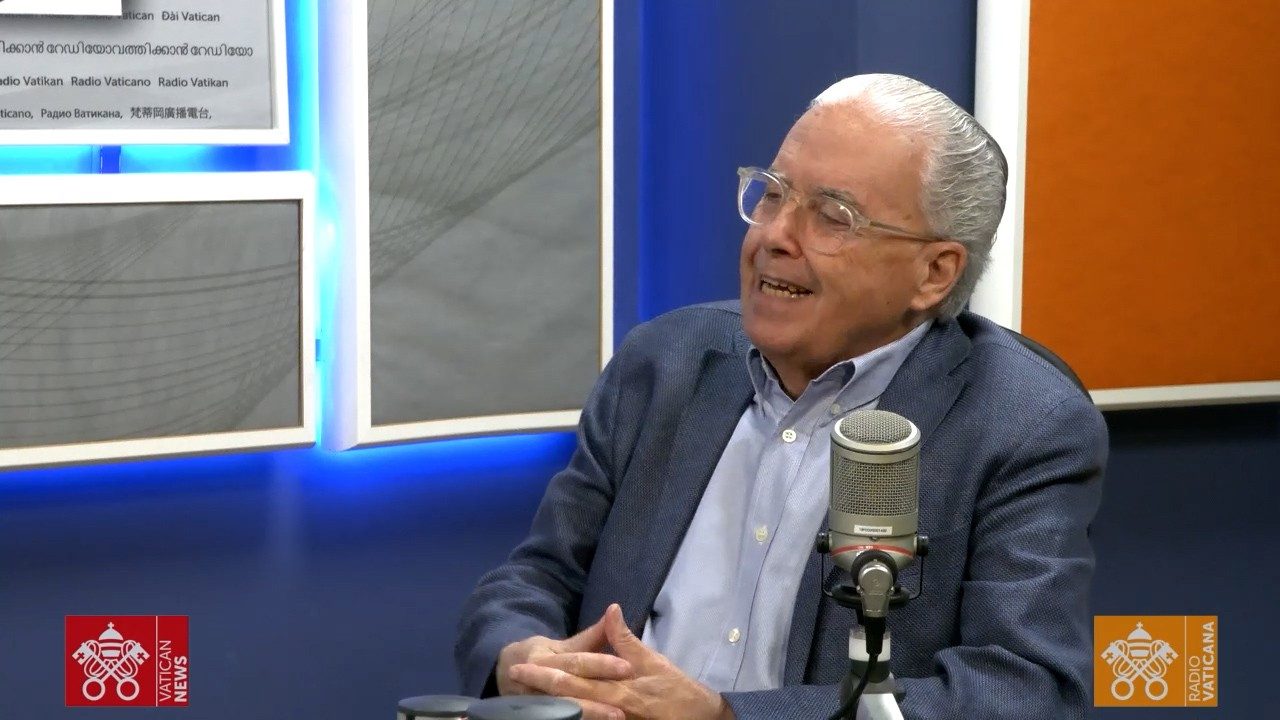
For Dr. Guzmán Carriquiry, the upcoming apostolic visit of Pope Leo XIV to Latin America—scheduled for November 6 to 17 and including stops in Uruguay, Argentina and Peru—is an occasion for the peoples of the region to renew their hope and rekindle their faith. In an interview broadcast by Vatican media, the former secretary of the Pontifical Commission for Latin America and Uruguay’s ambassador to the Holy See until 2025 stressed that the choice of Uruguay as the starting point is not arbitrary, but reflects a land where the Catholic tradition is rooted in the nation’s very origins.
Carriquiry recalled that the peoples of Latin America have always welcomed the successors of Peter «with open arms, with affection and with devotion.» In that context, he said the Pontiff’s first apostolic journey to the region will be far more than a visit to three countries, since he will encounter a Church and peoples called to face the social challenges affecting the continent.
Our Lady of the Thirty-Three and spiritual memory
One of the central moments of the Uruguayan leg will be the Eucharistic celebration Leo XIV will preside over on November 8 in Florida, next to the Shrine of Our Lady of the Thirty-Three, patroness of Uruguay. The small Marian image, of Guaraní tradition, holds a unique place in the spiritual and national memory of Uruguayans. As Carriquiry recalls, the image accompanied the protagonists of the independence struggle and was present at the events of 1825, when the Thirty-Three Orientals launched their fight and independence was proclaimed.
«Since then, Our Lady of the Thirty-Three, a precious invocation, has accompanied the history of Uruguayans,» the interviewee says. For him, the fact that the Pope begins his Latin American visit before this devotion is an extraordinary occasion to recover a memory that is part of the country’s spiritual heritage. It is not merely a matter of looking back to the past, but of allowing that history to challenge the present once again and raise new questions about faith.
A small and free Church in a secularized country
The papal visit will also highlight a particular reality within the Latin American panorama. Uruguay is one of the most secularized countries in the region, the result of a historical process that, from the late 19th and early 20th centuries, was marked by strong secularization and a gradual separation between public life and religious tradition. Carriquiry believes this process not only weakened the Church’s institutional presence but also gradually stifled religious concerns in broad sectors of society, especially among the working classes.
In this context, he recalls a phrase from Cardinal Daniel Sturla about the Church in Montevideo: «My Church in Montevideo is a poor Church, free, small, very small, very small.» The image expresses the fragility of a community that must proclaim the Gospel in a society where religious practice has lost ground. But it also points to a mission that, for Carriquiry, remains essential: helping Uruguayans reconnect with the Christian roots of their history and discover their meaning for life today.
«The Church is the midwife of the homeland,» he recalls, alluding to the contribution of the Catholic tradition in Uruguay’s historical formation, from the first Franciscans to José Gervasio Artigas and the protagonists of independence. That is why the celebration in Florida can become a privileged moment to recover that heritage and restore it to the people’s awareness. Carriquiry hopes the Pontiff’s presence will help the Catholic tradition «touch hearts, stir consciences, awaken religious concerns, and rekindle faith among Uruguayans.»
Context and relevance
Regarding the challenges the Pope will face in his encounters with Latin American communities, Carriquiry points to two major fronts: putting Jesus Christ back at the center of people’s lives and addressing the deep social wounds affecting the continent. The first consists of renewing the encounter with Jesus Christ, «Savior, Lord of History.» On this path, popular religiosity is a richness that the Church is called to accompany and evangelize, especially in countries like Peru, where expressions of faith are part of the daily life of many communities. The point, he explains, is not only to preserve a tradition but to help faith become new life, a personal, family and community commitment.
Alongside this spiritual challenge, the Pope will encounter a social reality marked by inequality, poverty and precarious work. Carriquiry recalls that nearly half of Latin American workers are employed in the informal economy, often under conditions that barely allow them to subsist. Concern for these situations is not separate from the proclamation of the Gospel: the Church is called to accompany those who suffer, defend human dignity and promote a more just society. Yet for the interviewee, the mission is grounded in the proclamation of Christ: «First the Kingdom of Heaven, and all the rest comes besides.»
From Uruguay to Argentina and Peru, Leo XIV’s first journey to Latin America opens an opportunity to renew hope and strengthen the bonds between faith and the daily life of peoples. Each country presents its own challenges, but all share the need to proclaim the Gospel in societies in transformation. In Uruguay, the visit to the Shrine of Our Lady of the Thirty-Three will evoke a history in which faith and the building of the nation were deeply intertwined, and it will also be an invitation to ask how that heritage can speak again to the hearts of new generations. At the end of the interview, Carriquiry sums up in one sentence his bond with the continent and his confidence in the Church’s mission: «We never lose our enthusiasm when we speak of Latin America.»
Original source: www.vaticannews.va (published October 30, 2026)