Dear brothers and sisters, we continue the catechesis on the documents of the Second Vatican Council, particularly on the Constitution Sacrosanctum Concilium on the Liturgy. When Saint Augustine wants to explain to the newly baptized the mystery of the Body of Christ, he takes up the passage from Saint Paul that we have heard: “You are the body of Christ and individually members of it” (1 Cor 12:27). And he adds: “It is your mystery that you receive. To what you are, you respond: Amen, and your response is like your signature. It is said to you: ‘The body of Christ,’ and you respond: ‘Amen.’ Be, then, members of the body of Christ, so that your amen may be true. […] Be what you see, and receive what you are” (Sermon 272: PL 38, 1247).
The Eucharist as Sacrament of the Kingdom
Immediately after evoking the Last Supper of Jesus, the Constitution on the Liturgy speaks of the Eucharist with these Augustinian accents. For Christians, participating at the Lord’s table means “being formed by the Word of God, being restored at the table of the Lord’s Body, giving thanks to God” (cf. SC, 48). It is by receiving him in his Word and in the Eucharist that we become what we receive. We become the Body whose Head is the risen Christ, seated at the right hand of the Father (cf. Col 1:18), who prepares a place for us in heaven (cf. Jn 14:3): the Eucharist is thus the sacrament of the coming Kingdom. It is the Bread of the journey, which leads us toward the heavenly homeland, until the blessed day when “God will be all in all” (1 Cor 15:28).
Unity and Gift of Self
The liturgical assembly offers the Sacrifice “not only through the hands of the priest, but also united with him” (SC, 48). In this perspective, the Eucharist is the form of the spiritual sacrifice of Christians (cf. Heb 13:16; Rom 12:1), as a path of union with God and mutual union. By participating in it, they learn “to offer themselves and, day by day, to be consumed, through Christ, in unity with God and among themselves” (ibid.). Thus, by incorporating us into Christ, the Eucharist teaches us to adopt the lifestyle of the Lord Jesus himself, marked by the gratuitous gift of self. This gift, therefore, makes us enter into the dynamic of unity, which offers a powerful antidote against the leavens of division that undermine our world, our communities, our families, and our hearts (cf. SC, 47).
Word and Eucharist: A Single Act of Worship
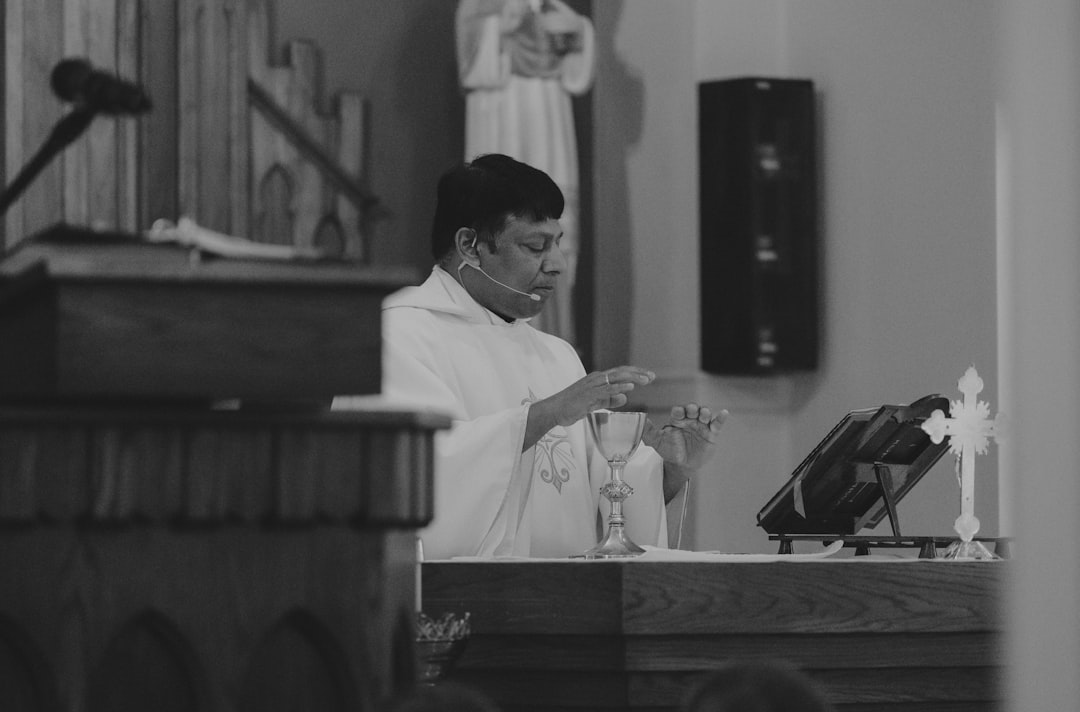
Dearest, when we participate in the Eucharist we are invited to listen to the Word of God and to be nourished at the Lord’s table, where he himself offers himself to the Father. These two parts of the Mass, the Liturgy of the Word and the Eucharistic Liturgy, “are so closely connected with each other that they form a single act of worship” (SC, 56). As for the Word, it must be remembered that it is not only about acquiring intellectual knowledge of the Scriptures, but about receiving the Word “living and effective” (Heb 4:12), addressed by God to all and at the same time to each one, a Word that nourishes and feeds together with the Eucharistic Bread and makes us pass from the decay of sin to new life in Christ. “The Eucharist opens us to the understanding of Sacred Scripture, just as Sacred Scripture in turn illuminates and explains the Eucharistic Mystery” (Benedict XVI, Post-Synodal Apostolic Exhortation Verbum Domini, 55).
The Second Vatican Ecumenical Council asked to open more widely the treasures of the Bible, so that the table of the Word of God might be offered to the faithful more abundantly (cf. SC, 51). The liturgical reform translated this request into that treasure which is the Lectionary, that is, the book that
Original source: www.fanodiocesi.it (published on June 24, 2026)