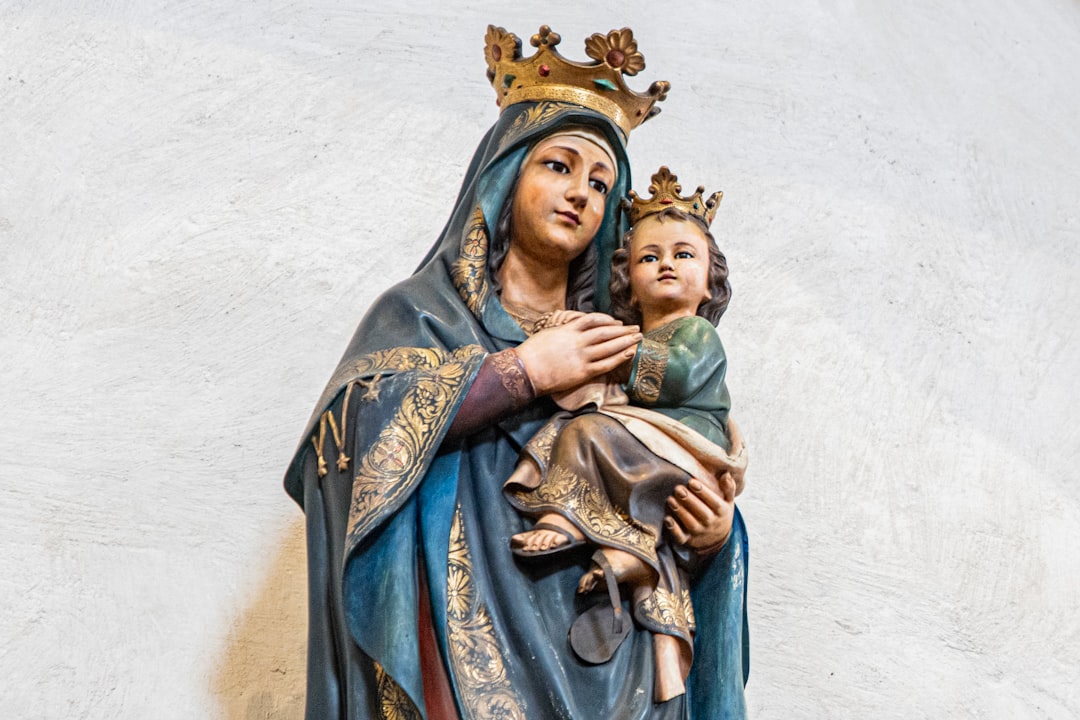
The story of the Virgin of Chiquinquirá dates back to the 16th century, when Antonio de Santana, a Spanish encomendero, commissioned the painter Alonso de Narváez to create an image of the Virgin of the Rosary for a chapel in the region of Suta, in the department of Boyacá. The work, made on a cotton cloth, depicted the Virgin Mary with the Child Jesus, accompanied by Saint Anthony of Padua and Saint Andrew the Apostle. Over the years, the painting began to deteriorate due to humidity and the conditions of the place, losing its original colors until it was in such a deteriorated state that it was abandoned in an old oratory in Chiquinquirá.
The event that transformed the history of the image occurred on December 26, 1586. María Ramos, a Spanish woman residing in Chiquinquirá, had cleaned and organized the oratory where the deteriorated canvas remained. While she was there with an indigenous woman named Isabel and her son, they observed how the image suddenly regained its original colors and brightness, and the visible damage to the fabric disappeared. This event was interpreted as a miracle and quickly awakened the devotion of thousands of believers, who began to make pilgrimages to Chiquinquirá to venerate the image.
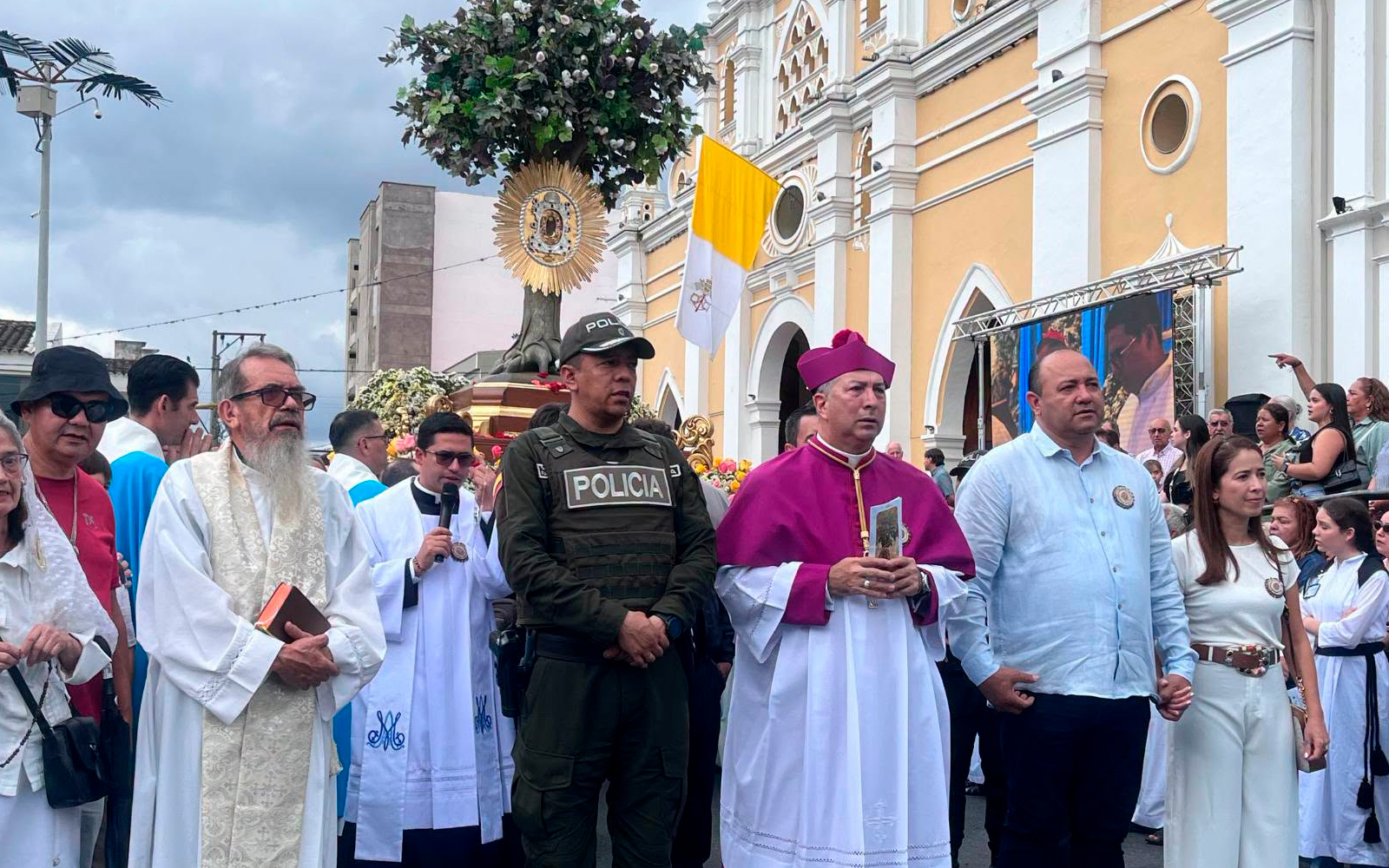
The devotion grew to become one of the most important in the country. In 1829, the Virgin of Chiquinquirá was proclaimed Patron Saint of Colombia by Pope Pius VII, and July 9 was established as its main feast day. The image is preserved in the Basilica of Our Lady of the Rosary of Chiquinquirá, in Boyacá, where thousands of pilgrims arrive each year to pay homage to one of the most representative religious figures in Colombia.
It is important to distinguish between popular devotion, the testimony of the faithful, and the official recognition of the Church. The devotion arises from the account of the miracle of 1586, transmitted through generations and accepted by the community. The testimony of María Ramos and Isabel constitutes the historical basis for the miraculous attribution, but ecclesiastical recognition was formalized centuries later with the papal proclamation of 1829. The Church has not issued a dogmatic pronouncement on the miracle, but its cult is approved and promoted as part of popular piety.
Context and Relevance
The Virgin of Chiquinquirá is a symbol of religious and cultural identity in Colombia. Her image, miraculously restored, is considered a sign of hope and unity for the faithful. The Basilica of Chiquinquirá is one of the most visited sanctuaries in the country, and its main feast day, July 9, brings together pilgrims from all regions. Marian devotion, in this case, is intertwined with colonial history and evangelization, but also with the daily life of believers who come to ask for favors or give thanks for graces received.
The phenomenon of Chiquinquirá is not limited to a past event; it remains alive today. Each year, thousands of people participate in processions and celebrations, and the image is considered a channel of grace for many. The relationship with Eucharistic spirituality is not direct in the original account, but devotion to the Virgin of the Rosary, linked to the meditation of the mysteries of Christ, invites the faithful to deepen their faith. The story of the Virgin of Chiquinquirá is an example of how a local event can become a pillar of a nation’s religious identity.
Original source: www.besame.fm (published on July 16, 2026)