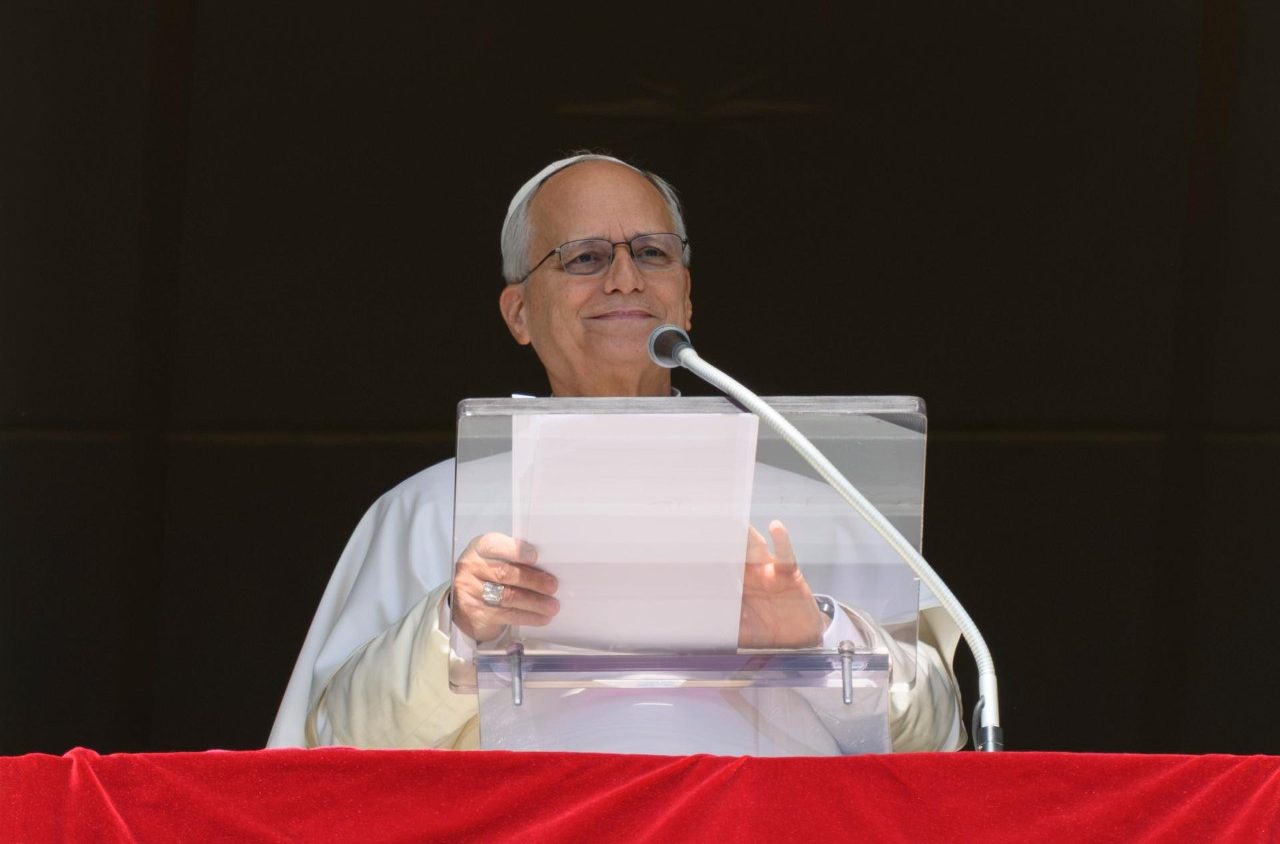
The announcement by Leo XIV during the Angelus on October 11, 2026, about an upcoming operation to remove a lung nodule, evokes other moments when popes have shared their frailty with the faithful. According to the text, the pontiff explained that the nodule was identified during checkups, is «limited,» detected «at a very early stage» and «well localized.» He added that he decided to undergo the operation following the advice of doctors and thanked the faithful for their spiritual closeness. At the end of the Angelus, he accompanied the announcement with the words: «I entrust myself to your prayers!»
The journalistic reconstruction brings together six episodes from different pontificates. The first dates back to November 1, 1967, Solemnity of All Saints, when Paul VI began the Angelus with a reference to his own health: «Greetings to you, dearest children; and thank you for your concern for our health.» Three days later, on November 4, he would undergo prostate surgery for a benign condition, performed by the team of surgeon Pietro Valdoni in an operating room set up in the Apostolic Palace. In that Angelus, Pope Montini did not speak of the upcoming surgery: he expressed his gratitude to those who took an interest in his condition, before introducing a meditation on life beyond time, Christian hope, and communion with the deceased.
On May 17, 1981, four days after the attack in St. Peter’s Square, the voice of John Paul II reached the faithful again through a message recorded at the Gemelli Polyclinic and transmitted by the Regina Caeli. Wojtyła thanked them for their prayers, remembered the two people who had been wounded alongside him, and declared his forgiveness of the attacker. Then he spoke of the suffering he was experiencing: «United to Christ, Priest and Victim, I offer my sufferings for the Church and for the world.» A particularly relevant precedent dates back to July 12, 1992. «I would like to entrust something to you,» said John Paul II after the Angelus, announcing that that very night he would be admitted to Gemelli Hospital «to undergo diagnostic tests.» The pontiff asked to be accompanied in prayer and renewed his entrustment to the Virgin with the «Totus Tuus.» On July 15, he was operated on to remove a benign intestinal tumor. The text emphasizes that it is important to distinguish what he personally announced—his hospitalization for tests—from the subsequent surgery.
On May 29, 1994, upon returning to the Angelus from the window of the Apostolic Palace after being hospitalized for a femur fracture, John Paul II thanked the doctors, nurses, nuns, and other healthcare personnel, as well as those who had shown him their solidarity. His convalescence also became an opportunity to meditate on the Christian meaning of suffering, in the context of the Year of the Family. Thinking of the influential world figures he was going to meet and addressing them spiritually, he said: «I must meet again with these influential figures of the world and I must speak. On what themes? The theme of suffering is still relevant. And I would like to say to them: Understand this, understand why the Pope was once again in the hospital, once again suffering, understand it, reflect on it!» He then expressed his gratitude to the faithful for their «community of prayer»: the bond maintained during his treatment was once again manifested in the Sunday encounter.
The context of the words spoken by Benedict XVI on February 11, 2013, during the Consistory in which he announced his historic resignation from the Petrine ministry, is different. In his «Declaration» in Latin, the pontiff explained that his strength, due to his advanced age, was no longer sufficient for the task entrusted to him. He did not communicate a diagnosis or a procedure, but the result of a discernment before God, relating his energies to the responsibilities of service. Pope Ratzinger recalled that the ministry is also carried out in suffering and prayer. However, to govern the Church and proclaim the Gospel, he also believed that «vigor of body and soul» was necessary, a strength he had felt diminishing in recent months. Benedict XVI also indicated prayer as the way in which he would continue serving the Church.
On July 11, 2021, a week after his colon surgery, Francis prayed the Angelus from the balcony of the tenth floor of Gemelli Hospital. He thanked the faithful for their closeness and support through their prayers. From his own hospital experience, he reflected on the value of «good medical care, accessible to all.» He emphasized the commitment needed to safeguard this resource and encouraged doctors, healthcare workers, and hospital staff. Care, in his words, also includes listening, attending, and being tender: gestures capable of alleviating pain and comforting a sick person. Several hospitalized children accompanied him. Francis invited them to join them in prayer, extending his thoughts to all the sick, especially those in the most difficult conditions, so that no one would feel alone.
Context and relevance
An operation, the aftermath of an attack, a hospitalization for tests, a convalescence, the weakening of strength: these episodes belong to different circumstances. In the words of the pontiffs, personal fragility is intrinsically linked to the ministry, to gratitude for the care received, and to attention to those who suffer. Prayer, whether requested, shared, or offered, accompanies this relationship. Even in times of illness, the bond between the pastor and the community continues to manifest itself. The text distinguishes between what the popes personally announced, such as John Paul II’s hospitalization for tests, and subsequent medical interventions, such as the surgery of July 15, 1992. It also differentiates the testimony of suffering offered by John Paul II in 1981 from Benedict XVI’s decision in 2013, based on a discernment before God and not on a medical diagnosis. In Francis’s case, the source emphasizes his reflection on access to medical care and the invitation to pray for the sick. The reconstruction shows how, throughout different pontificates, the communication of one’s own fragility has been accompanied by prayer and closeness to those who suffer.
Original source: www.vaticannews.va (published on October 13, 2026)