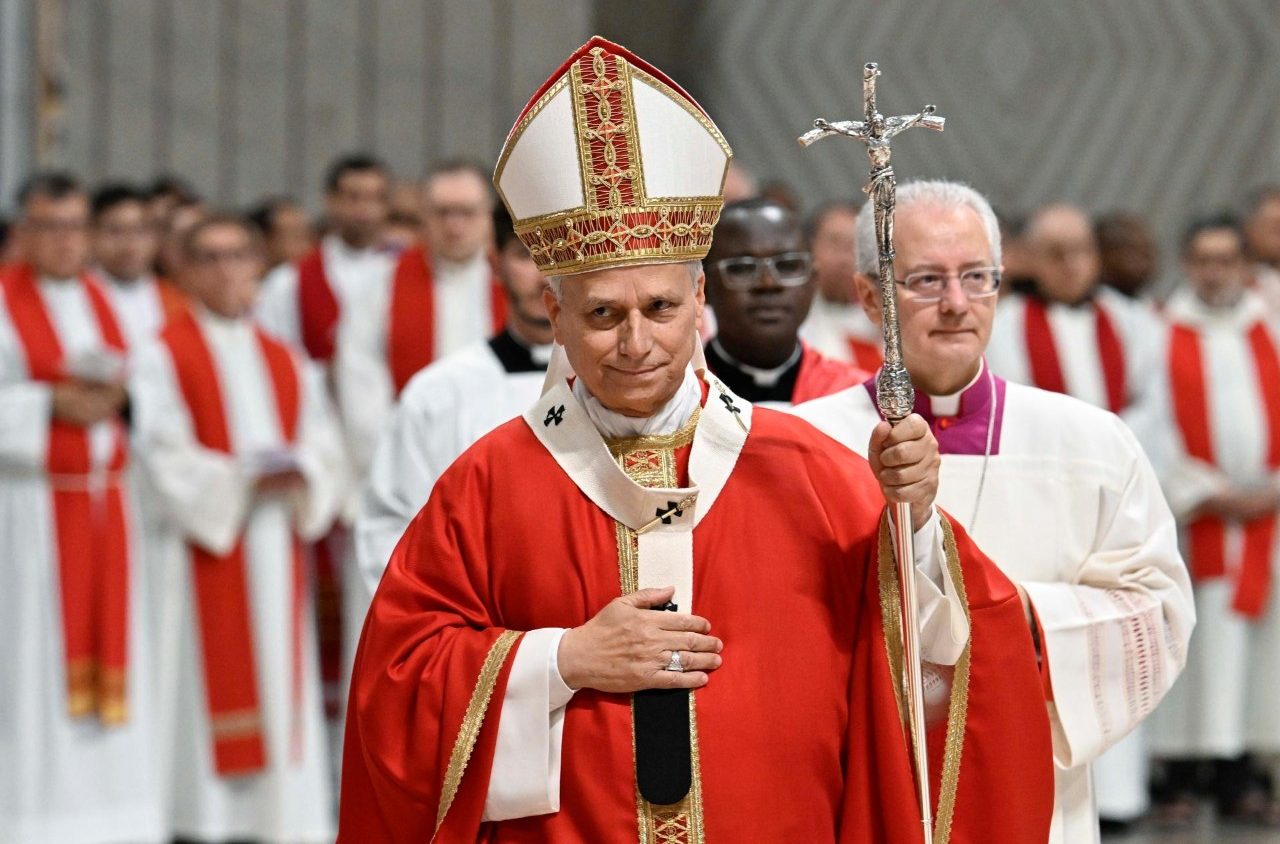
Pope Leo XIV presided over the Mass inaugurating the Academic Year of the Pontifical Universities, celebrated in St. Peter’s Basilica in the Vatican. Before hundreds of students, faculty, and researchers, the Pontiff delivered a homily in which he stressed that study is a service to faith and truth, and called for opening the intellect and educational relationships to the creative breath of the Risen One, who gives peace and unity.
A new academic year as openness to the Risen One
Leo XIV explained that a new academic year is not limited to resuming study or research activities. It is about taking on one’s own task, he said, in response to God who calls and to a humanity that waits. In that sense, he insisted that the common mission must be nourished by the Lord: no one will teach, study, or research for themselves alone, but with others, for others, and above all with the Lord and for the Lord.
The Pope warned that in every age there have been false teachers who try to steer the religious sentiment of believers toward their own interests, even encouraging them to radicalize certain teachings to the detriment of those of Christ and his Gospel. Therefore, citing the words of the Apostle Paul to the Galatians, he called for intelligence, memory, and critical sense, and asked that study be valued as a service to faith and truth, for one’s own good and that of the many brothers and sisters for whom the Lord gave his life.
Prayerful intelligence and memory in the face of the algorithm
The Pontiff clarified that the joy and enthusiasm generated by the encounter with the Lord do not consist in being fascinated or enchanted, but in questioning and asking in the light of the Word of God, a path of faith in the following of Jesus Christ. This is what leads the Church to safeguard the treasure of Revelation through prayerful intelligence, scientific reflection, cultural mediation, and its translation into practice. It is a unique mission, even though vocations differ.
Leo XIV stressed that intelligence must exercise memory, not merely dumping data as an algorithm does, but recalling lived experiences, the resonances of the human soul, coming into contact with one’s own goodness, with the breath and dynamism of the heart. He warned that routine, ambitions, rivalries, and other negative factors can over time distract attention and energy, leaving people shriveled and weak, irritable and sad. Therefore, he said, there is a need to return to the heart.
Guarding the heart and cultivating friendship
The Pope insisted on the need for students, researchers, and faculty to guard their hearts so that every age and responsibility may be lived with the mark of the Spirit. He also stressed the importance of cultivating friendship at the university, a precious gift, all the more so when it is lived in the common search for truth in Christ. Bring life to study and study to life, according to the logic of the Incarnation, he told them, and he invited them to share what nourishes them, to open the door and not close themselves off.
Returning to a passage from his encyclical Magnifica humanitas, the Holy Father recalled that those who deal with the fragmentation of knowledge and with the impact of new technologies on the human mind invite us to promote rhythms that include silence, reflection, reading, and weighed analysis, for without these elements interior freedom can be compromised.
Context and relevance
In conclusion, Leo XIV referred to the study of theology, a common denominator in the Pontifical Universities, and maintained that its research helps illuminate the work of all, placing itself as a crossroads of the various fields of knowledge. He explained that in the Pontifical athenaeums of Rome multiple sensibilities, cultures, and diverse traditions also intersect, in which the Gospel reveals its inexhaustible treasures. Hence his invitation to look around, because in those classrooms is the whole world, with people from Africa, Asia, America, Europe, and Oceania. Do not limit yourselves to sitting next to one another: meet one another, speak among yourselves, listen to one another, tell one another your experiences of Church, pray together, share moments of leisure, and let friendships be born that will accompany you throughout your lives.
Original source: www.vaticannews.va (published on October 8, 2026)