A spiritual heritage at a crossroads
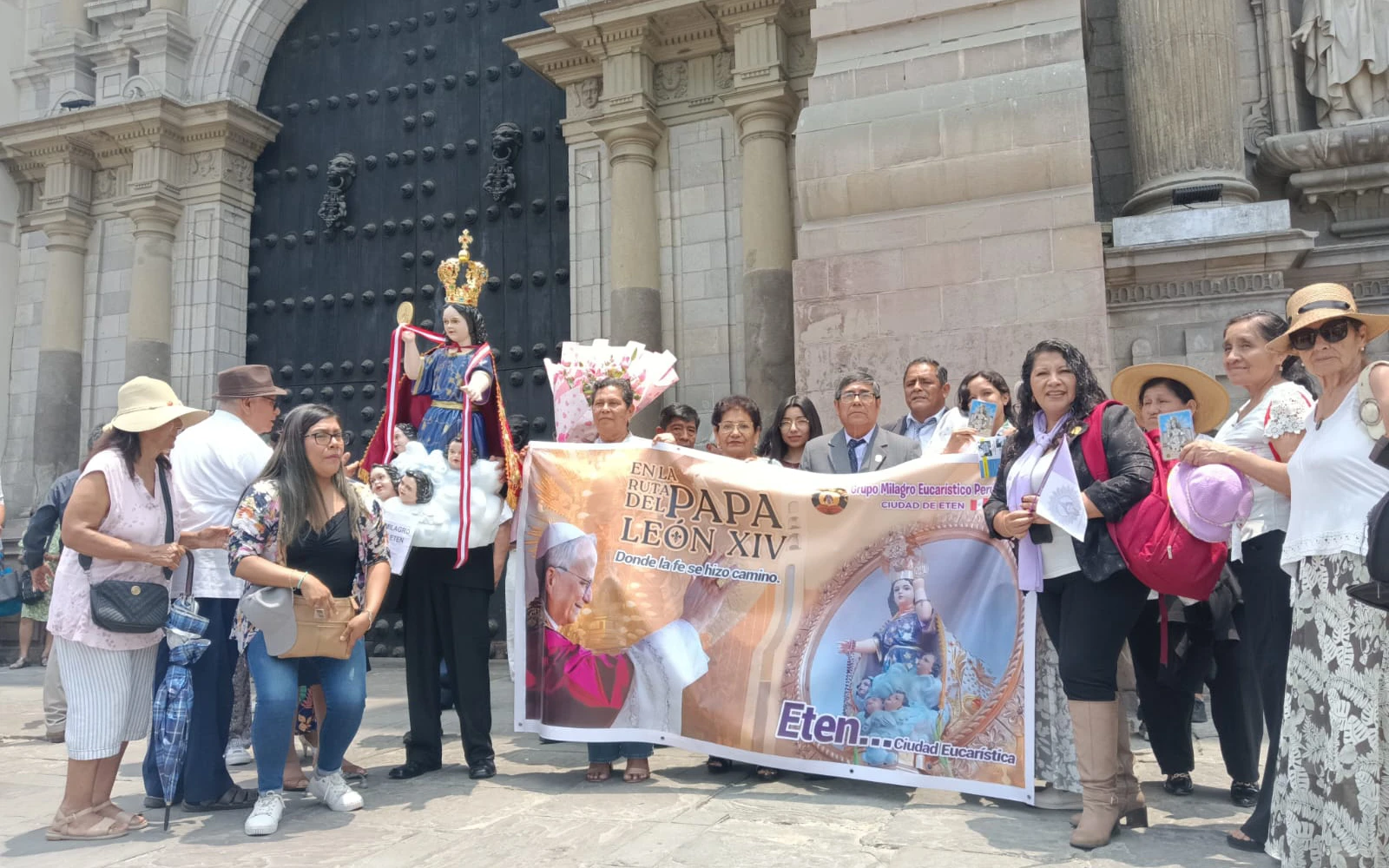
The Eucharistic miracle of Ciudad Eten, which took place in 1649 in the Peruvian region of Lambayeque, currently faces a contemporary challenge: balancing its growing visibility with the comprehensive preservation of its religious essence. This prodigy, in which a consecrated host took on the image of the Child Jesus and later that of three united hearts, is considered a sign of the real presence of Christ in the Eucharist and the only Eucharistic miracle recognized in Peru.
The fine line between devotion and spectacle
In a webinar entitled "Devotion and Destiny," organized by the University of San Ignacio de Loyola and the University of Extremadura, experts identified the trivialization of faith as the main risk, which could lead to excessive commercialization. Jesús León Ángeles, coordinator of the Milagro Eucarístico Perú 1649 group, stressed that "the focus should always be on the Eucharist and not on spectacle." She warned of the danger of the festival being reduced to profane events or musical shows that detract from the sacred meaning of the event.
Lessons from the past and new governance
Ángeles recalled that, in the past, festive activities in areas surrounding the old chapel of the miracle led to disorder and disrespect for the site, something that, she said, has changed since 2017. This process of revaluation is associated with the pastoral impetus of the then Bishop Robert Prevost, now Pope Leo XIV. In the face of these challenges, the creation of a Multisectoral Governance Committee is being considered to bring together the Church, civil authorities, and the community, assigning clear roles: spiritual and evangelizing leadership for the former, and infrastructure, services, and urban order for the latter.
Projection with identity
Recently, Ciudad Eten was declared the "Eucharistic City of Peru," which opens up the prospect of greater visibility. Devotees imagine this place as a benchmark of faith and a model of sustainable development, even aspiring to the construction of a large-scale sanctuary. However, the warning is clear: any development must prioritize the pilgrim's deep spiritual experience. "It is not a simple tourist trip, it is an encounter with the real presence of Christ," emphasized Ángeles, who also highlighted the work of dissemination through pilgrimages and an image of the Eucharistic Child pilgrim that travels through various parishes.
Original source: www.aciprensa.com (published on January 30, 2026)