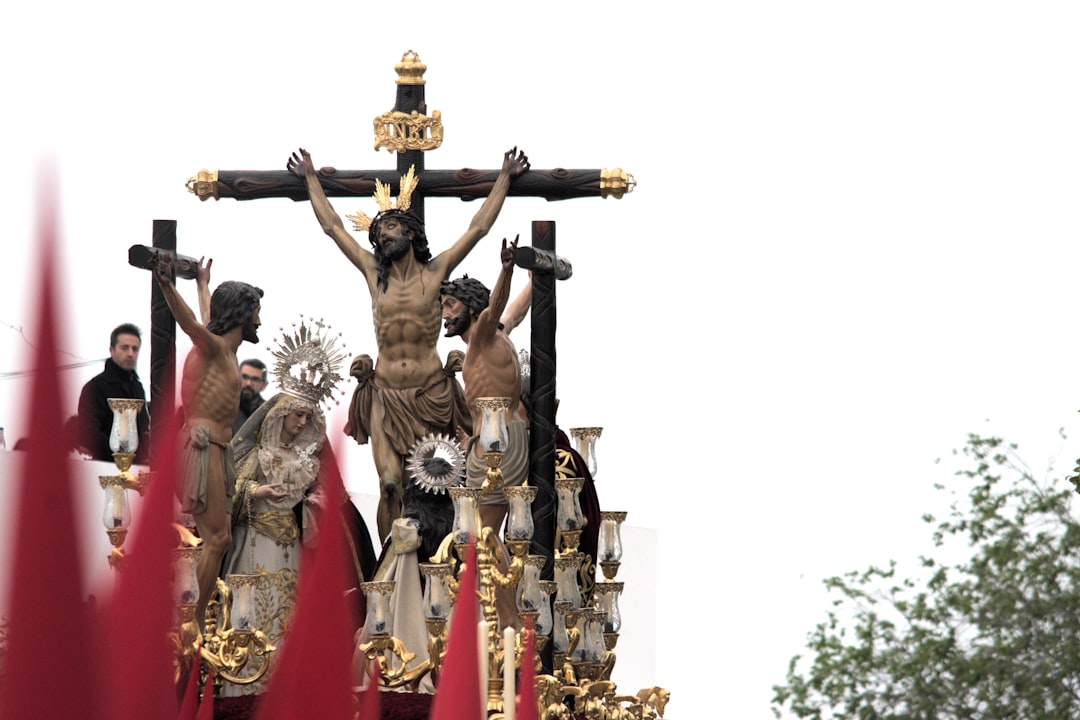
The town of Renca, in the Chacabuco Department of the province of San Luis, was the scene of a massive manifestation of faith during the annual festival of the Christ of Renca, also known as the Lord of the Hawthorn. The celebration, held every year, brought together thousands of pilgrims who arrived from different points of the province, the country, and even abroad to pay homage to this image venerated for its spiritual significance and popular roots.
The diocesan bishop, Monsignor Gabriel Barba, presided over the central ceremonies, accompanied by a group of priests who expressed: “Let us ask Christ to transform our lives, our hearts, through trust and hope in him.” These words reflect the tone of the day, which combined Catholic liturgy with expressions of popular piety in an atmosphere of recollection and joy.
After the celebration of the Mass, the image of Christ led a procession that traveled through the streets of the town. The devotees participated in various ways: some on foot, others on bicycles, on horseback, or in vehicles such as cars, trucks, and lorries. This diversity of means of transport highlighted the massive attendance and the effort of the faithful to be present at this annual appointment, which has become a symbol of religious and cultural identity for the region.
The organizers and hosts were especially grateful for the presence of a delegation from Chile, which underscores the cross-border nature of this devotion. The parish priest of the commune expressed: “We ask the Divine Christ for the children, for the grandparents, for the families, for peace, and that no table be without its daily bread.” These intentions, focused on everyday needs and peace, resonated among the attendees, who expressed their faith with prayers and songs.
Context and relevance
The devotion to the Christ of Renca is part of a long tradition of Argentine popular piety, where images of the crucified or flagellated Christ are objects of special veneration. Although no direct link has been established with contemporary figures such as Carlo Acutis, known for his Eucharistic spirituality, the celebration underscores the centrality of faith in the lives of communities. It is important to distinguish between devotion, which is a spontaneous practice of the faithful; testimony, which is reflected in massive participation; the attribution of graces or miracles, which belongs to the sphere of personal belief; and official recognition by the Church, which is manifested in the presence of the bishop and the liturgy, but does not imply a formal declaration of an extraordinary nature.
The festival of the Christ of Renca is not only a religious event but also a social phenomenon that strengthens community ties and local identity. The participation of people of different ages and conditions, as well as the arrival of pilgrims from other countries, shows that this tradition transcends borders and generations. The local Church, through its pastors, accompanies this expression of faith, guiding it toward an authentic Christian experience, centered on the conversion of the heart and hope in Christ.
In a broader context, celebrations like this remind us of the importance of popular religiosity in Latin America, where faith is expressed with colors, music, and concrete gestures. The procession, decorated vehicles, and community prayers are manifestations of an incarnate spirituality that seeks to find God in daily life. The plea for peace, families, and daily bread reflects the real concerns of the people, and the response of the faithful is a sign of trust in divine providence.
The day concluded with an atmosphere of gratitude and hope, leaving attendees with the certainty that devotion to the Lord of the Hawthorn will continue to attract multitudes in the coming years. The Church, for its part, will continue to accompany this path of faith, remembering that true devotion translates into a commitment to one’s neighbor and a life transformed by the love of Christ.
Original source: www.eldiariodelarepublica.com (published on July 21, 2026)