It has been 17 years since the death of Lucia de Jesus Rosa dos Santos, the longest-lived of the three shepherd children of Fatima who claimed to have seen the Virgin Mary in 1917. Her testimony turned the cave of the miracle into a sanctuary and affected the course of the entire Catholic Church.
The apparitions of 1917
Between May 13 and October 13, 1917, according to the accounts of three shepherds from the area — brothers Francisco de Jesus and Jacinta de Jesus Marto, and their cousin Lucia — the Virgin Mary appeared at Cova da Iria in Fatima, Portugal. Lucia, the eldest at ten years old, was the group’s spokesperson. None of them had attended school and they worked together as shepherds. The children’s testimonies received strong criticism from Portuguese public opinion, which was markedly secularist after the proclamation of the First Republic in 1910, and even from the Catholic Church itself, which doubted their veracity.
The shepherd children claimed that the Virgin would appear again on October 13, inviting everyone to witness it. That day, a large crowd gathered at Cova da Iria. Some witnesses claimed to have seen the sun move erratically, as if dancing, while others observed nothing unusual. Photographs from the time show no strange phenomena, and no astronomical observatory reported anomalies. Experts have suggested that it may have been a collective hallucination among predisposed individuals.
The miracle of the sun and ecclesiastical recognition
The Church began an investigation in November 1917, and thirteen years later, on October 13, 1930, the Bishop of Leiria, José da Silva, declared that the events constituted a miracle of the Virgin Mary, known as the miracle of the sun, and authorized the devotion to Our Lady of Fatima.
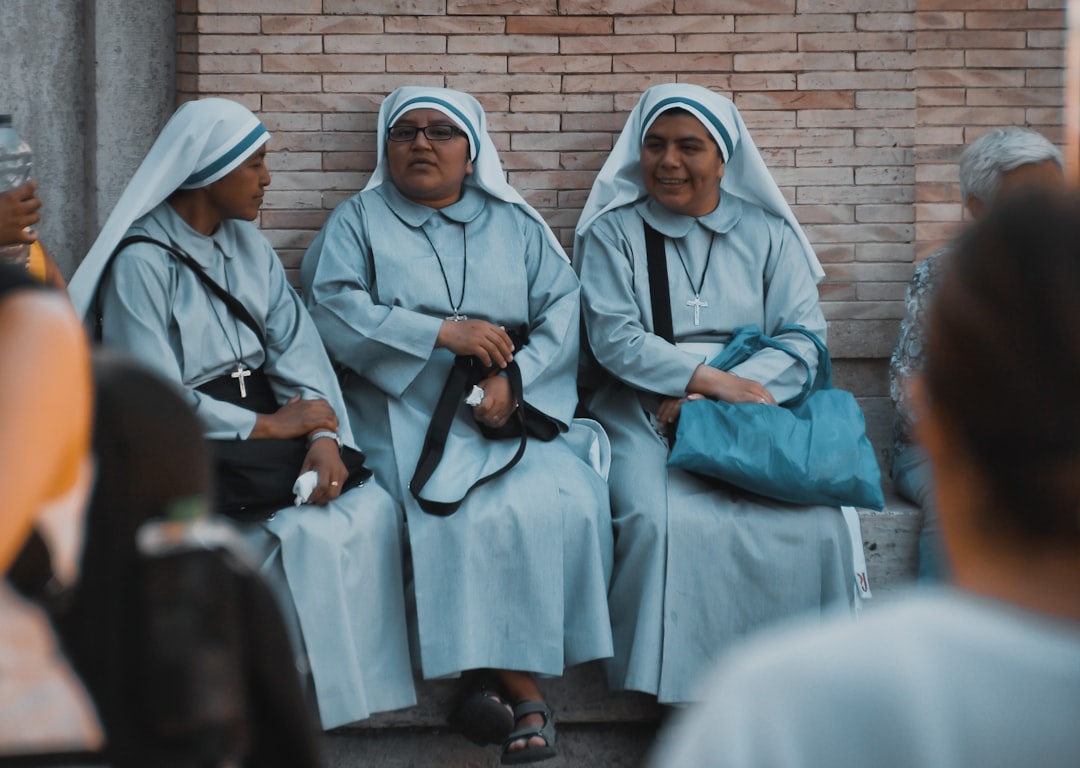
By then, only Lucia survived. Francisco and Jacinta died in 1919 and 1920, respectively, victims of the 1918 flu pandemic. Lucia, impacted by the growing importance of the site and the pilgrimages, sought anonymity. At age 18, she moved to Galicia and entered the congregation of the Sisters of Saint Dorothy, living in convents in Pontevedra, Tui, Rianxo, and Santiago. In 1925 and 1926, she claimed to have new visions of the Child Jesus, later recognized by the Church. The house where she lived in Pontevedra became the Sanctuary of the Apparitions.
Later life and the secrets of Fatima
Lucia returned to Portugal in 1946 and facilitated the establishment of Opus Dei in the country. Three years later, she entered the convent of the Discalced Carmelites in Coimbra, where she wrote her memoirs. In 1967, she visited Fatima on the occasion of the 50th anniversary of the apparitions and was at the Basilica of Our Lady of the Rosary, where her cousins rest.
Lucia revealed in 1941 the first two of the three secrets of Fatima, prophecies that, according to her, the Virgin had communicated to them. The first secret described a vision of hell, with demons and suffering souls. The second warned about the need for devotion to the Immaculate Heart of Mary to avoid wars and persecutions, mentioning the consecration of Russia. The third secret, kept secret until 2000, narrated the vision of a bishop dressed in white (interpreted as the Pope) climbing a mountain, being killed by soldiers, and with him dying bishops, priests, religious, and laypeople. In 2010, Pope Benedict XVI interpreted this message as a warning about corruption within the Church, especially regarding sexual abuse by clergy.
Legacy and death
Lucia died in Coimbra in 2005 and was buried next to her cousins in the Sanctuary of Fatima, now one of the main Marian pilgrimage sites in the world, with about six million visitors annually.
Original source: www.vigoe.es (published on February 13, 2022)
Photo: Darya Luganskaya on Unsplash